The Story of SGFR: From Failure to Building Singapore’s Snack Culture
Haikkel's Childhood
SGFR didn’t start as a snack brand. It started with a kid trying to figure out how to make money. At 14, instead of giving a daily allowance, his dad gave him credits on Alibaba and told him to figure it out himself. There was no guidance, no plan, and honestly, no clue what he was doing. The first few attempts failed. He tried importing clothes and selling them online, but nobody bought them. It felt like nothing was working. Then something clicked. One day in school, everyone was talking about an upcoming Marvel movie, and he wondered if people would actually buy merchandise tied to that hype. He used whatever money he had left to bring in movie related products and started selling them. This time, it worked. That was the first real lesson. Demand matters more than anything.
The First Venture
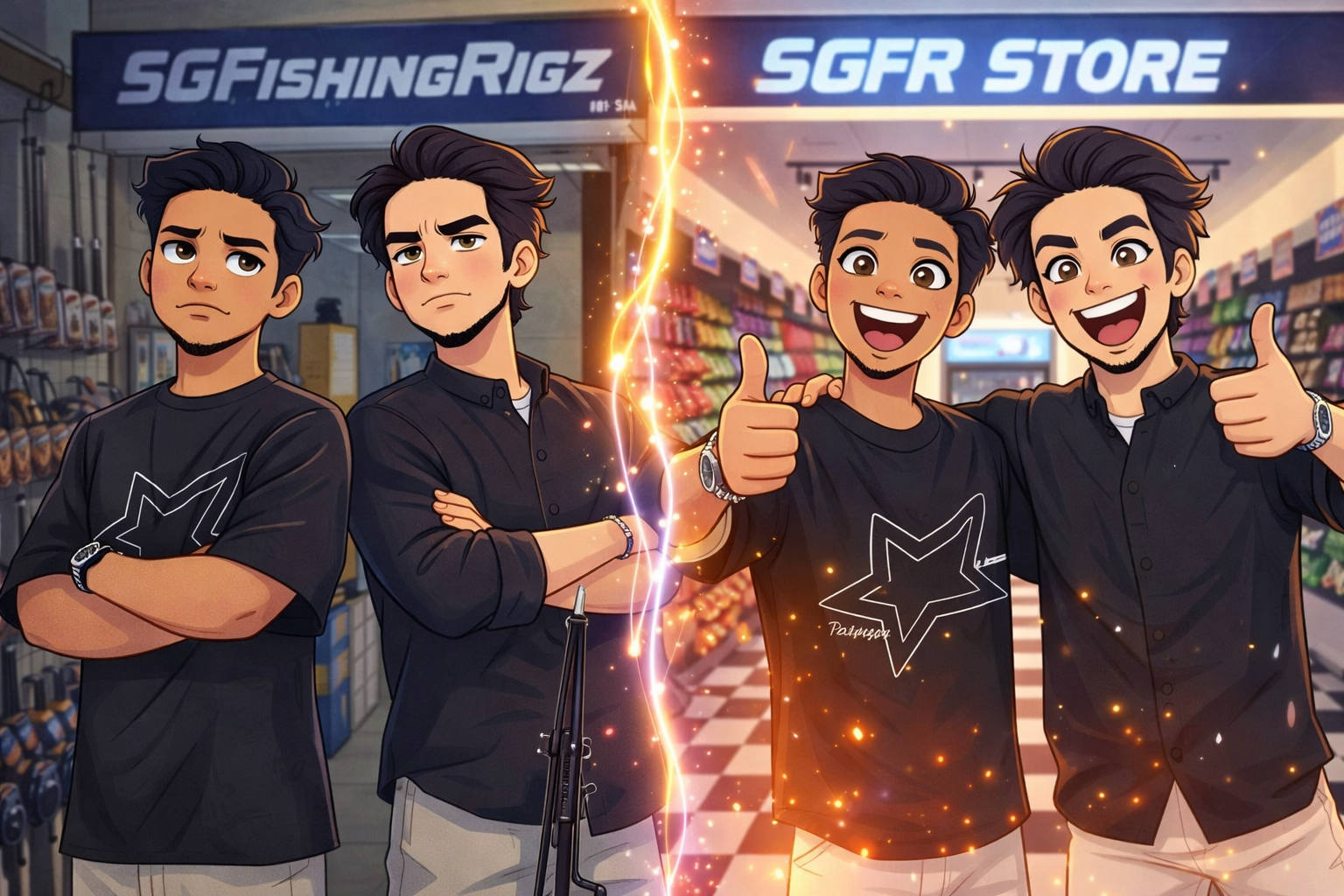
That mindset stayed with him. At 17, after picking up fishing, he noticed another gap. Beginners had no idea how to start, and most fishing shops only catered to experienced anglers. So he built SGFishingRigz, selling ready to use fishing kits with everything included, even QR codes for tutorials. The business grew quickly. It was his first real taste of building something from scratch and seeing people pay for it. By 2022, he had his own physical store. Then everything collapsed. When borders reopened after COVID, fishing was no longer popular. People moved on. Sales dropped fast, and no matter what he tried, events, new products, different ideas, nothing worked. The business eventually died. For most people, that would have been the end. For him, it became the pivot.
The Pivot
While trying to keep the business alive, he noticed something small but important. Other fishing shops had started selling snacks and drinks just to survive. At the same time, viral snacks from overseas were blowing up online, but Singapore didn’t really have access to them. So he tried something new. He brought in PRIME Hydration and posted a TikTok about it. It sold out the next day. That was the moment SGFR was born.
The Lowest Point
At first, things moved fast. He travelled, connected with suppliers, expanded the product range, and started opening stores. It felt like everything was finally working. Then came the biggest hit. To compete with larger retailers, he placed a bulk order worth nearly 100,000 dollars with a supplier he trusted. The supplier disappeared the moment the money was sent. Just like that, almost everything was gone. Not long after, another person took advantage of the situation, gained access to his supplier network, and cut him out completely. The same products he built his business on started appearing in major chains. At the same time, online criticism grew. People were calling SGFR overpriced. The pressure got so bad that it started affecting his health. He ended up in and out of the hospital and was diagnosed with eosinophilic duodenitis. At 20, everything hit at once. Business, reputation, health. It felt like there was no way forward. But that was also the moment everything changed.
Creating Something of His Own
He realised something simple. If SGFR depended on other people’s products, it would always be replaceable. The only way to survive was to build something of his own. That’s when Quench was created. Inspired by pasar malam drinks, the idea was simple but different. Turn it into the world’s first canned ice cream milk drink, and bring people along for the journey by documenting everything online. When it launched, it worked. Not just because of the product, but because people felt like they were part of it. That shifted everything. SGFR was no longer just a store selling viral snacks. It became a brand that creates its own products, its own stories, and its own culture.
Building Culture, Not Just Products
From there, more products followed. Cwumble Cwunch was created after running out of stock for a viral chocolate product. Instead of giving up, he worked with a small team, stayed up for days, and kept testing until they got it right. It sold out immediately and eventually became one of SGFR’s signature products. But what really made SGFR different was not just the products.It was how everything was shared.Every sourcing trip, every failure, every product launch was turned into content. People were not just buying snacks, they were following a journey. Inspired by creators he grew up watching, SGFR became a mix of media and retail, where storytelling was just as important as the product itself.Today, SGFR is not just about selling snacks. It is about creating culture.
What’s Next
As SGFR continues to grow, the focus is no longer just on opening more stores, but opening the right ones. Some of the earlier locations, including the original store at 139 Tampines Street 11, are being phased out as the brand moves into stronger, higher footfall malls. This marks a shift from early hustle locations to more strategic retail positioning. So far, SGFR has entered malls like Bedok Mall and Northpoint, where performance has been strong and growth continues. The next phase includes expansion into Jurong Point, Lot One, and Century Square. The direction is clear. It is not just about growing bigger, but growing better.
The Real Lesson
The SGFR story is not about one big success. It is about failure after failure, and the decision to keep going anyway. It is about adapting, learning, and rebuilding. Because in the end, success was never about getting it right from the start. It was about starting at all.