The Man Behind Masjid Sultan: Mahmood bin Haji Dawood
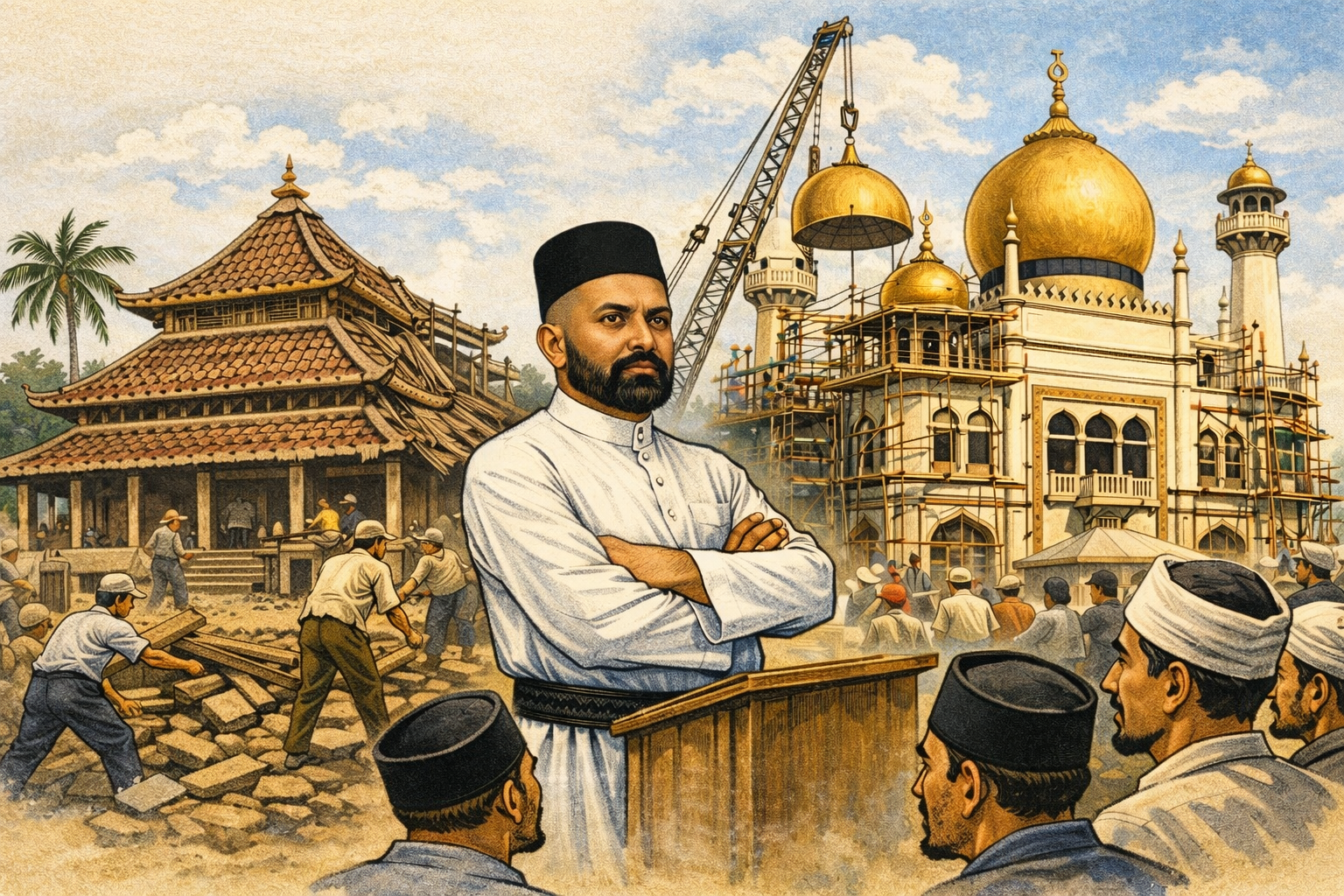
The Man Who Rebuilt Masjid Sultan
Masjid Sultan is one of the most iconic mosques in Singapore. But few people know the story of the man who made the mosque we see today possible.
A Legacy That Began Before Him
Mahmood bin Haji Dawood was born in 1879 at 3 Bali Lane, in a shophouse owned by his father. His father, Dawood bin Hassan, was a sailor from Gogha, India who arrived in Singapore in 1870 and built a successful life through trade and real estate. Over time, Dawood became a respected merchant and community leader, acquiring properties along Haji Lane and Bali Lane. In 1879, he was appointed as one of the first trustees of Masjid Sultan. Mahmood grew up in this environment. Leadership and responsibility were not new to him. They were part of his upbringing from the very beginning.
Building His Own Path
As he grew older, Mahmood followed in his father’s footsteps and entered the real estate business. Through property ownership and management, he built both wealth and influence in Singapore. He later became a Director of Jelai Concessions Ltd, a gold mining company in Pahang, showing that his business reach extended beyond Singapore. His success earned him titles such as Zamindar, meaning landowner, and the Bombay Millionaire of the City. These titles reflected his scale and standing, but they did not define his purpose.
A Leader of the Muslim Community
By the early 20th century, Mahmood had become one of the most respected Muslim leaders in Singapore. In 1914, he was appointed as a trustee of Masjid Sultan, continuing the role his father once held. He also served as honorary secretary and took on key leadership responsibilities connected to the mosque. Beyond Masjid Sultan, he played an active role in the wider community. In 1923, he became the first President of the Singapore Indian Association. He also served as Honorary Secretary and later Vice President of the Singapore Muslim Association, and was involved in the Muslimin Trust Fund Association. Through these roles, Mahmood was not just participating in the community. He was helping shape its structure.
The Condition of Masjid Sultan
By the early 1900s, Masjid Sultan had already stood for nearly a century. Over time, the building began to deteriorate. Its condition worsened, and it no longer reflected the strength or growth of the Muslim community in Singapore.At that point, the issue was no longer just about maintenance. It became a question of whether the mosque would remain as it was or be transformed into something better.
The Decision to Rebuild
On 1 January 1924, Mahmood called for a gathering of Muslims in Singapore to address this issue. At that meeting, he proposed demolishing the existing mosque and rebuilding Masjid Sultan into a larger and more suitable structure for the community. The estimated cost was $250,000, which was an extremely large amount at that time. Because of this, many doubted whether the project could realistically be achieved.
Turning Vision Into Reality
Despite the doubts, Mahmood continued to push the project forward. He worked to rally the community, raise funds, and build support for the reconstruction. This process took time and required persistence, but gradually, support grew and the project moved forward. The rebuilding of Masjid Sultan eventually took shape, resulting in the grand mosque that stands today at North Bridge Road. Because of his leadership and commitment, Mahmood bin Haji Dawood became closely associated with the development of the mosque in its present form.
The Man Behind the Influence
Although Mahmood was known for his wealth, his reputation was also built on his character. He was described as generous, approachable, and fair in his dealings. He treated both the rich and the poor with equal respect, and his honesty made him widely trusted within the community. This combination of leadership and character strengthened the influence he had over the people around him.
His Passing
On 19 November 1931, Mahmood died after falling from the second floor of his residence at 11 Bali Lane. He was 52 years old at the time. Prior to this, he had undergone surgery on his leg and required the use of a walking stick to move around. His passing was regarded as a significant loss to the Muslim community in Singapore.
The Scale of His Legacy
In 1953, as part of the estate distribution process, 86 out of his 91 properties were sold. These included a total of 140 shophouse units, with a combined value of $2.5 million. This reflected the scale of wealth he had accumulated during his lifetime, and his family was regarded as one of the wealthiest in Asia during that period.
More Than a Mosque
Masjid Sultan is more than just a historic building. It represents a turning point in the community’s history, when a decision was made not to accept decline, but to rebuild with purpose. At the center of that decision was Mahmood bin Haji Dawood. His role was not just to maintain what existed, but to recognise when change was needed and take responsibility to make it happen. That is why his name remains tied to the mosque that stands today.